
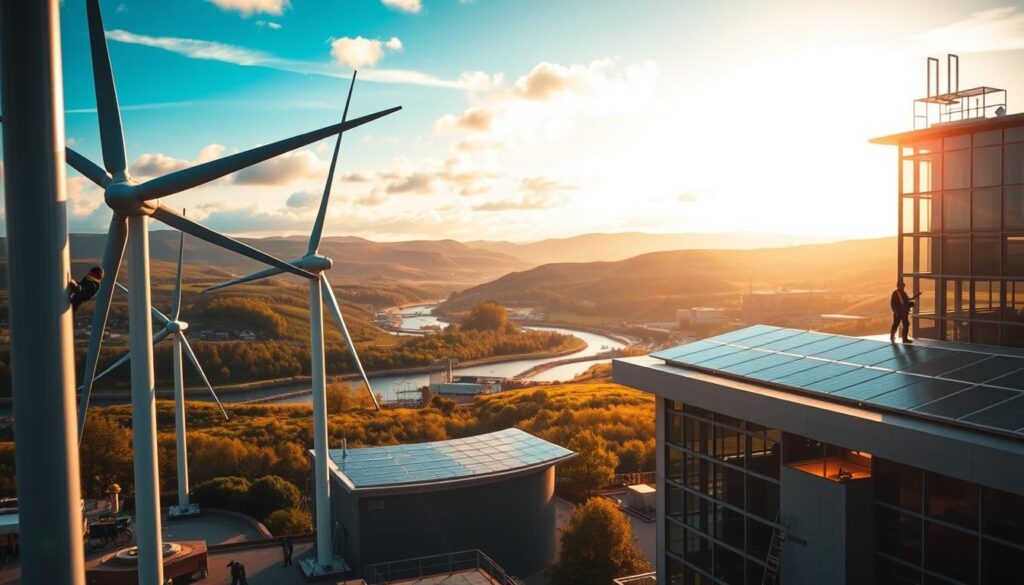
As Europe continues to lead the global transition to a more sustainable and environmentally friendly economy, the demand for careers in renewable energy is on the rise. The shift towards a greener future is creating new opportunities in the job market, particularly in sustainable energy careers.
The European job market is witnessing a significant surge in renewable energy job opportunities, driven by the need for innovative solutions and technologies that support a cleaner environment. This article explores the top careers shaping Europe’s future economy.
Europe’s green revolution is gaining momentum, driven by the European Green Deal’s goal of carbon neutrality by 2050. This ambitious plan is not only transforming the continent’s energy landscape but also creating new opportunities in the green energy workforce.
Renewable energy has become a cornerstone of Europe’s energy policy. As of now, renewable sources account for a significant portion of the EU’s energy mix, with wind and solar power leading the charge. Countries like Denmark and Germany are pioneers in wind energy, while southern nations such as Spain and Italy are harnessing solar power.
The European Green Deal is a comprehensive strategy aimed at making Europe carbon neutral. It encompasses various sectors, from energy and transport to industry and agriculture. This deal is expected to have a significant impact on eco-friendly employment in Europe, creating new job opportunities in green technology and sustainable practices.
Significant investments are being made in renewable energy projects across Europe. According to recent projections, the green energy sector is expected to create thousands of new jobs in the coming years. For instance, the wind energy sector alone is projected to create over 100,000 new jobs by 2030. This growth is not limited to installation and maintenance; it also includes jobs in manufacturing, research, and development.
The green energy workforce prospects are bright, with a wide range of career opportunities emerging in the environmental job market in Europe. As Europe continues to lead the green revolution, the demand for skilled professionals in this sector is expected to rise.
As Europe continues to lead the way in green energy, Americans may find exciting career opportunities in this rapidly growing sector. The European green energy market is experiencing significant growth, driven by ambitious climate targets and investments in renewable technologies.
The green energy landscape in Europe differs from that in the US in several key ways. Europe has been at the forefront of the green energy transition for longer, with many countries having already made significant investments in renewable energy infrastructure. This has created a more mature market with a wider range of job opportunities.
Some key differences between the US and European green energy markets include:
For Americans considering green energy careers in Europe, understanding visa requirements and work permits is crucial. The process can vary significantly depending on the country. Some key points to consider include:
The rise of remote work has opened up new possibilities for Americans to work in Europe’s green energy sector without relocating. Many companies are now embracing flexible work arrangements, allowing professionals to contribute to green energy projects from anywhere.
Key benefits of remote work in green energy include:
As Europe continues to invest in renewable energy, the demand for skilled workers in this field is on the rise. The green energy sector is becoming a significant contributor to Europe’s economy, driven by innovative technologies and job creation in sustainable energy.
To identify the top 5 green energy jobs, we analyzed market trends and employment data from reputable sources. Our selection methodology considered factors such as job growth rates, salary ranges, and the overall impact on Europe’s transition to a low-carbon economy. The result highlights sustainable energy job opportunities that are in high demand.
Salary ranges for green energy jobs vary across European countries. The following table provides a comparison of average salaries for the top 5 green energy jobs in different regions:
| Job Title | Germany | UK | France |
|---|---|---|---|
| Wind Energy Engineer | €55,000 | £50,000 | €52,000 |
| Solar Technology Specialist | €50,000 | £45,000 | €48,000 |
| Energy Storage Developer | €60,000 | £55,000 | €58,000 |
The green energy sector is expected to continue growing through 2030, driven by increasing demand for renewable energy sources and green technology employment. Projections indicate that jobs in this sector will experience significant growth, contributing to clean energy workforce development across Europe.
Wind energy engineers are at the forefront of Europe’s green revolution, driving innovation in offshore wind technology. As the demand for renewable energy continues to grow, the role of these engineers has become increasingly vital in harnessing wind power, particularly in offshore environments.
Wind energy engineers are responsible for designing, developing, and maintaining wind turbines and farms. Their tasks include conducting site assessments, analyzing wind patterns, and optimizing turbine performance. They work closely with other professionals to ensure that wind energy projects are executed efficiently and safely.
Key Responsibilities:
To succeed as a wind energy engineer, one typically needs a bachelor’s degree in a relevant field such as mechanical engineering, electrical engineering, or environmental science. Additionally, skills in data analysis, project management, and proficiency in software like CAD are highly valued.
Essential Skills:
The salary for wind energy engineers in Europe varies by country and experience level. On average, a wind energy engineer can expect a competitive salary package, with opportunities for career advancement as the industry continues to grow.
| Country | Average Salary (€) | Job Growth Outlook |
|---|---|---|
| Denmark | 55,000 | High |
| Germany | 60,000 | Very High |
| Netherlands | 58,000 | High |
Countries like Denmark, Germany, and the Netherlands are at the forefront of wind energy development in Europe. These nations offer not only job opportunities but also a supportive environment for innovation and professional growth.
Many American professionals have successfully transitioned to careers in European wind energy. For instance, John Doe, a former wind energy engineer from the U.S., now leads a team in Denmark, contributing to the development of large-scale offshore wind farms.

Such success stories highlight the potential for international careers in the renewable energy sector, driven by Europe’s commitment to green energy.
The Mediterranean sunshine is proving to be a goldmine for solar technology specialists, who are crucial in Europe’s green energy revolution. As the continent continues to invest heavily in renewable energy, the demand for professionals with expertise in solar technology is skyrocketing.
Solar technology specialists are responsible for designing, developing, and implementing solar energy systems. Their responsibilities include:
These specialists work closely with engineers, project managers, and other stakeholders to ensure that solar energy projects are completed efficiently and effectively.
To succeed as a solar technology specialist, one typically needs:
Key skills include: proficiency in solar design software, understanding of photovoltaic systems, and the ability to work at heights.
Solar technology specialists can expect competitive salaries, with median salaries ranging from €40,000 to €70,000 per year, depending on experience and location. Career growth opportunities are significant, with potential roles including senior project management, consultancy, or specialized positions in research and development.
“The solar industry is not just about installing panels; it’s about innovating and optimizing energy solutions for a sustainable future.” –
European Solar Industry Association
The Mediterranean region is a hotspot for solar energy jobs, with countries like Spain, Italy, and Greece offering numerous opportunities. Other regions, such as Portugal and southern France, are also emerging as significant players in the solar energy sector.
There are growing partnerships between American and European companies in the solar industry, driving innovation and creating new job opportunities. These collaborations are fostering the development of new technologies and facilitating the exchange of expertise across borders.
For instance, companies like First Solar and SunPower have established significant operations in Europe, contributing to the growth of the solar energy sector.
Energy storage developers are at the forefront of Europe’s energy transition, enabling the integration of renewable energy sources into the grid. As the demand for sustainable energy positions continues to grow, the role of these developers becomes increasingly vital.
Energy storage developers design, develop, and implement energy storage systems, primarily battery technologies, to support the stability and efficiency of renewable energy sources. Their responsibilities include assessing project feasibility, developing technical specifications, and collaborating with cross-functional teams to ensure project success.
“The energy storage sector is revolutionizing the way we think about energy production and consumption,” says
Henrik Stiesdal, a pioneer in renewable energy technology
. “It’s an exciting time to be involved in this field.”
Professionals in green technology professions typically hold degrees in engineering, physics, or related fields. Key skills include knowledge of battery technology, project management, and data analysis. Experience with software tools such as MATLAB or Python is also highly valued.
Salary expectations for energy storage developers vary based on location, experience, and specific job requirements. On average, professionals in energy efficiency occupations can expect competitive salaries, with opportunities for career growth as the sector expands.
| Country | Average Salary (€) |
|---|---|
| Germany | 55,000 |
| Sweden | 60,000 |
Several European companies are leading the charge in energy storage development, including Tesla’s European divisions, Northvolt, and Sonnen. These companies are at the forefront of environmentally friendly employment initiatives, driving innovation in the sector.
Professionals from the US tech sector can leverage their skills in software development, data analysis, and project management to transition into sustainable energy positions. The tech industry’s emphasis on innovation and problem-solving is highly transferable to the energy storage sector.
As Europe continues to drive towards a more sustainable energy future, the demand for skilled professionals in energy storage development is expected to grow, offering exciting opportunities for those looking to transition into green technology professions.
Green building architects and engineers are at the forefront of Europe’s sustainable construction revolution. As the continent continues to lead in environmental sustainability, the demand for professionals who can design and implement eco-friendly building solutions is skyrocketing.
Green building architects and engineers are responsible for designing buildings that minimize environmental impact. Their tasks include:
As Mark Jacobson, Director of the Atmosphere/Energy Program at Stanford University, notes, “Sustainable architecture is not just about energy efficiency; it’s about creating buildings that are healthy, productive, and sustainable over their entire lifecycle.”
To succeed as a green building architect or engineer in Europe, professionals typically require:
Salaries for green building architects and engineers in Europe vary by country and experience level. Here’s a comparison of average salary ranges in major European cities:
| City | Average Salary Range (€) |
|---|---|
| Berlin | 45,000 – 70,000 |
| Paris | 50,000 – 80,000 |
| London | 55,000 – 90,000 |
Cities like Copenhagen, Vienna, and Barcelona are at the forefront of sustainable architecture in Europe. These cities are known for their innovative green building projects and commitment to reducing carbon emissions.
For American professionals looking to work in Europe, it’s essential to understand how US architectural credentials are recognized. Many European countries have reciprocal agreements with the US, allowing qualified architects to work with minimal additional certification. However, it’s crucial to research the specific requirements for the country you wish to work in.
The future of green building in Europe looks bright, with continued investment in sustainable infrastructure and a growing demand for skilled professionals. As the industry evolves, we can expect to see even more innovative and environmentally friendly building solutions.
Europe’s pursuit of a sustainable future is driving demand for hydrogen technology specialists. As the continent aims to become carbon-neutral by 2050, hydrogen energy is playing an increasingly crucial role in the energy mix.
Hydrogen technology specialists are responsible for developing and implementing hydrogen-based energy solutions. Their tasks include designing hydrogen production facilities, improving electrolysis technologies, and ensuring the safe storage and transportation of hydrogen.
To succeed in this field, professionals typically require a background in engineering, chemistry, or a related field. Key skills include knowledge of hydrogen production methods, experience with electrolysis technologies, and understanding of safety protocols for handling hydrogen.
Salaries for hydrogen technology specialists vary across Europe, with countries like Germany and Norway offering competitive packages. Career growth opportunities are substantial, with potential leadership roles in research and development or project management.
The European Union has launched several initiatives to promote hydrogen technology, including the European Clean Hydrogen Alliance. These efforts are expected to create thousands of jobs across the hydrogen value chain.
The global nature of the hydrogen economy presents numerous opportunities for international collaboration. European companies are partnering with international firms to share knowledge, technologies, and best practices in hydrogen energy.

| Country | Hydrogen Production Capacity (tons) | Projected Jobs in Hydrogen Sector |
|---|---|---|
| Germany | 10,000 | 5,000 |
| France | 8,000 | 4,000 |
| Netherlands | 6,000 | 3,000 |
As the hydrogen economy continues to grow, professionals with expertise in hydrogen technology will be in high demand. With the European Union’s commitment to a green future, the job prospects for hydrogen technology specialists are promising.
Europe’s green energy sector is rapidly evolving, creating a wealth of career opportunities for professionals looking to make a difference. The top 5 green energy jobs in Europe’s future economy, including wind energy engineers, solar technology specialists, energy storage developers, green building architects and engineers, and hydrogen technology specialists, are in high demand.
As the continent continues to transition to a more sustainable and environmentally friendly economy, the demand for sustainable energy careers is expected to grow. Green energy workforce prospects are bright, with eco-friendly employment in Europe on the rise. Professionals with the right skills and qualifications can capitalize on these opportunities and build a rewarding career in Europe’s green energy sector.
By understanding the job requirements, salary expectations, and growth prospects, individuals can make informed decisions about their career paths. Europe’s commitment to reducing carbon emissions and promoting renewable energy sources ensures a promising future for those pursuing a career in the green energy sector.
The top green energy jobs in Europe include wind energy engineers, solar technology specialists, energy storage developers, green building architects and engineers, and hydrogen technology specialists.
Professionals in the renewable energy sector require a range of skills, including technical expertise, project management, and collaboration. Specific skills may vary depending on the job, but often include proficiency in languages, knowledge of European regulations, and experience with sustainable technologies.
Salary expectations for green energy jobs vary across European countries, with factors such as cost of living, local market conditions, and industry standards influencing remuneration. For example, salaries in Western Europe tend to be higher than in Eastern Europe.
Americans looking to work in Europe’s green energy sector will need to research the specific visa requirements for their destination country. Some European countries have streamlined processes for skilled workers, while others may require additional documentation or sponsorship.
Yes, with the rise of digital technologies, remote work opportunities are becoming increasingly available in the European green energy sector. Many companies are open to hiring remote workers, and some roles may be entirely remote or flexible.
Professionals with experience in the US tech sector can leverage their skills in areas like energy storage, software development, or data analysis to transition into European green energy careers. Highlighting transferable skills, such as project management or problem-solving, can be beneficial.
The outlook for green energy job growth in Europe is positive, with the European Green Deal and other initiatives driving investment and demand for professionals in the sector. Projections indicate significant growth in green energy employment opportunities through 2030.